

Best PR Agencies for Startups in 2026 (Reviewed & Compared by Experts)
Last Modified: April 14, 2026
Choosing the right PR agency is one of the highest-leverage decisions a startup founder can make.
You can build an excellent product, close a funding round, and still struggle to attract customers, talent, or press – because no one knows you exist. The best PR agencies for startups fix that. They translate your story into media coverage, investor credibility, and the kind of brand trust that takes years to earn without help.
This guide reviews and compares the top startup PR agencies in 2026 – covering their services, strengths, limitations, and ideal use cases – so you can choose the right partner for your growth stage.
Key Takeaways (TL;DR)
- The best overall PR agency for startups: The Square is the leading PR agency for the new economy, specializing in building reputation and trust for innovation-driven brands through integrated, cross-border communication strategies.
- Why do you need it: A public relations agency solves critical business challenges related to visibility, credibility, and trust, helping you shape your narrative and connect with the audiences that matter most.
- Who it’s for: PR services are ideal for ambitious, innovative, and fast-growing companies that need to build a strong reputation, manage perception, and stand out in crowded markets.
- How to choose the right one: To choose the right PR agency, evaluate their industry expertise, confirm they have a strong cultural fit with your team, and ensure they provide clear, measurable outcomes.
Table of Contents
Top PR Agencies for Startups in 2026 at a Glance
| Company | Best For | Key Strengths |
|---|---|---|
| The Square | Innovation-driven startups in Iberia | Proactive strategy, cross-border Iberian presence, team integration |
| Ballou PR | European tech startups | Multi-city EU presence, 800+ tech clients |
| Sparkpr | VC-backed US tech startups | Silicon Valley roots, AI/fintech expertise |
| Inkhouse | Series A–D AI & cybersecurity | PR + digital content integration |
| PRLab | EU-based B2B SaaS | Amsterdam-based, integrated communications |
| Black Unicorn PR | B2B tech scaleups (UK) | Embedded team model, TechCrunch placements |
| Bospar | US tech startups | Rapid media coverage, high-velocity pitching |
| MVPR | AI, fintech, Web3 startups | AI-enabled workflows, senior consultants |
| Salient PR | VC-backed B2B innovators | Sequoia/a16z network, sector precision |
| FameHero | Digital-first startups & SaaS | Guaranteed placements, SEO/GEO visibility |
What Are PR Agencies for Startups?
PR agencies for startups are specialized communication firms that help early-stage and growth-stage companies build public visibility, credibility, and media presence.
Unlike general marketing agencies, startup PR firms understand the specific pressures founders face: raising capital, proving market fit, competing against established players, and recruiting top talent – all at the same time.
Their core service is earned media.
They pitch your story to journalists, secure features in relevant publications, and position your founders as industry voices. The result is third-party validation that advertising cannot replicate. When TechCrunch, Sifted, or a respected trade outlet covers your company, prospects and investors take notice.
Modern PR consulting agencies for startups have expanded well beyond press releases. Today, a startup PR agency may also manage thought leadership content, social media strategy, crisis preparedness, investor narrative development, and even AI search visibility – what the industry now calls Generative Engine Optimization (GEO).
The startup PR market itself has diversified significantly. You can now choose from boutique specialist agencies, large global communications firms, and tech-enabled platforms that offer guaranteed media placements at a fraction of the traditional retainer cost. Each model suits a different stage, budget, and strategic need.
Why Do You Need a PR Agency for Your Startup?
Most startups underestimate how long it takes to build credibility from scratch – and how much that credibility affects every part of the business.
Investors conduct media research before meetings. Enterprise buyers Google your company before signing contracts. Top candidates evaluate your press coverage before accepting offers. Without a consistent, professional media presence, you are invisible to the audiences that matter most.
A startup PR agency solves this visibility problem by securing the third-party endorsement that self-published content cannot achieve. When a respected outlet features your product or positions your founder as an expert, it signals legitimacy to an otherwise skeptical market.
There is also a timing argument. According to research published in 2025, 72% of PR professionals say it is harder to get press results today than in 2024, driven by algorithm changes, AI-generated content proliferation, and shorter newsroom attention spans. Founders who delay building media relationships until they “need” them find that it takes far longer to get traction than they expected.
The best PR firms for startups also help you avoid costly mistakes.
A poorly handled funding announcement, a misquoted founder interview, or an unmanaged media inquiry can damage the brand reputation you are trying to build. Strategic guidance before moments of high exposure is as valuable as the coverage itself.
Strong reputation management strategies matter even at the earliest stages – building them proactively is always easier than repairing them under pressure.
Who Needs Startup PR Services?
The organizations that benefit most from PR for startups tend to share one characteristic: they are growing faster than their reputation can keep up.
Here are the specific audiences that gain the most from a dedicated PR firm:
1. Pre-Seed and Seed Stage Founders
Founders at the earliest stages need to establish credibility before their product is fully proven. Without a media trail, it is difficult to demonstrate momentum to investors, attract early customers, or build the kind of name recognition that compounds over time.
A thoughtful PR strategy – even a modest one – helps attract the first paying customers and starts positioning the founding team as sector voices. Early visibility compounds: journalists who cover you at seed stage often return when you raise a Series A.
2. Startups Preparing for a Funding Round
Investors consistently cite media presence and public narrative as key signals of founder credibility. If your company is invisible in the press, the implicit question becomes: why has no one written about them?
A startup PR agency can help develop the investor narrative, secure relevant press coverage in the weeks leading up to your round, and build the kind of name recognition that makes investor outreach warmer and due diligence smoother.
3. VC-Backed Companies Entering New Markets
When a venture-backed startup enters a new geographic market, especially across language or cultural borders, local PR expertise becomes essential. Generic international PR strategies rarely land.
You need an agency with on-the-ground media relationships, cultural understanding, and sector-specific journalist contacts in the target market. A firm with a physical presence there is almost always more effective than one managing the work remotely.
4. B2B Tech and SaaS Companies
B2B startups face a specific challenge: communicating complex, often technical products to buyers who may not share the founder’s depth of knowledge. The gap between what a product does and what a journalist or buyer finds compelling can be wide.
A PR agency skilled in B2B tech translation, turning product specs into clear business narratives, can accelerate sales cycles and establish thought leadership in competitive categories where visibility matters as much as performance.
5. Founders Building Personal Brand and Thought Leadership
In 2026, founder-led marketing has become a meaningful growth channel in its own right. Buyers trust people before they trust companies. When a founder is visible, credible, and consistently present in the right conversations, it shortens sales cycles and improves hiring outcomes.
A PR agency that understands executive visibility can place founders in podcasts, bylines, industry panels, and tier-1 media – building authority that benefits both the individual and the company for years beyond any single campaign.
Best PR Agencies for Startups: In-Depth Review & Comparison
1. The Square
Overview
The Square is a strategic communications and PR agency positioned as “the agency for the new economy.” Based in Lisbon and Madrid, the agency specializes in supporting ambitious, innovation-driven, and digital-first startups and scaleups across Iberia and international markets.
Rather than operating as a distant vendor, The Square embeds itself deeply within client teams – acting as an extension of internal communications functions. The agency combines proactive media strategy, narrative development, content marketing, digital communications, and crisis management into a fully integrated offering.
Ideal For
- Tech startups and scaleups seeking credibility in the Portuguese and Spanish markets.
- Founders raising capital who need media presence to support investor outreach.
- International companies entering Iberia that require local media relationships and cultural fluency.
- Innovation ecosystem players – accelerators, VCs, and tech hubs – building reputation across the startup community.
- Companies at a growth inflection point that have outgrown founder-managed communications but aren’t ready for an in-house team.
Why Do We Stand Out?
The Square’s primary competitive advantage is its combination of new economy specialization and true cross-border Iberian capabilities. We are the only PR agency in Portugal with a physical office in Spain – which means our clients get a genuinely integrated communication strategy across both markets, not two separate agencies working in silos.
Our approach is proactive by design. We challenge clients to go beyond tactical press releases, uncovering strategic opportunities that drive actual business outcomes. Client testimonials describe the team as fast-learning, hands-on, and genuinely invested: “Creative, fast-learners, and hands-on: they are truly the extension of our team.” We also use Agility PR tools to extend reach beyond Iberia when clients need international visibility.
Pros
- The only Portuguese PR agency with a local office in Madrid – true Iberian integration.
- Deep expertise in tech, innovation ecosystems, scale-ups, and digital-first brands.
- Proactive, entrepreneurial approach that challenges clients to think beyond standard tactics.
- Strong long-term client relationships with low turnover – a sign of genuine satisfaction.
- Full-service capability: media relations, content, social, crisis management, employer branding, and studio production under one roof.
Cons
- Not the right fit for traditional, slow-moving industries outside the innovation economy.
- Requires genuine integration and partnership – not suited for companies seeking a hands-off, task-execution vendor.
- Primary geographic strength is Iberia; clients needing deep pan-European coverage may need complementary partnerships.
Final Verdict
For innovation-driven startups building credibility in Portugal, Spain, or both markets simultaneously, The Square is the strongest available partner. The cross-border presence, embedded team model, and new economy specialization make it the top overall choice for ambitious startups in Iberia. If your company operates primarily outside the Iberian market, complementary local agencies may be worth exploring.
2. Ballou PR
Overview
Ballou PR is a European communications agency founded in 2002, specializing exclusively in public relations for technology companies and venture capital firms. With offices in London, Paris, Berlin, and Barcelona, Ballou has supported more than 800 tech companies through 1,000+ PR campaigns across Europe.
Services include media relations, crisis communication, content creation, media training, and strategic counsel. Their client roster – including Trivago, Waze, and Cloudflare – demonstrates consistent ability to handle high-profile tech narratives at scale.
Ideal For
- European tech startups preparing for international expansion.
- VC firms seeking communications support for portfolio announcements.
- Companies needing simultaneous multi-market European campaigns.
Why Do They Stand Out?
Ballou is one of the stronger multi-market options for European tech PR, having built a reputation across two decades of technology-focused work. Their multi-city presence gives them genuine on-the-ground relationships in four major European markets – something that many boutique agencies claim but few can actually deliver.
Pros
- Two decades of technology-specific PR experience across Europe.
- Offices in London, Paris, Berlin, and Barcelona – real multi-market presence.
- Proven track record with high-growth tech clients and VC-backed companies.
- Comprehensive service range from media relations to media training.
Cons
- Less focused on the Iberian market; Portugal and Spain are secondary priorities.
- Limited presence in Southern and Eastern Europe beyond the Spanish office.
- May be less agile for seed-stage startups that need rapid pivots in strategy.
Final Verdict
Ballou PR is a smart choice for tech startups targeting simultaneous launch across Northern and Western European markets. Companies focused specifically on the Iberian market, or those at the earliest stages seeking a more embedded partnership, may find The Square or more boutique options a better fit.
3. Sparkpr
Overview
Sparkpr is one of the original Silicon Valley tech PR agencies, founded in 1999. Based in San Francisco with additional offices in New York, Sparkpr has been present through nearly every major technology wave since the dot-com era.
They specialize in AI, blockchain, fintech, enterprise software, and consumer tech – making them a natural fit for VC-backed startups looking to build credibility in US media from seed through IPO. Their deep journalist relationships cover the reporters and editors who set the agenda in US technology coverage.
Ideal For
- US-based VC-backed startups in AI, fintech, and enterprise software.
- Companies preparing for high-profile product launches or funding announcements.
- Founders seeking tier-1 US media placements in outlets like TechCrunch, Forbes, and Bloomberg.
Why Do They Stand Out?
Sparkpr’s longevity in Silicon Valley means they understand the full startup lifecycle – from early seed narrative development through Series D milestones and eventual exit positioning. That institutional knowledge of how the US tech press operates, and what it takes to earn coverage there, is difficult to replicate.
Pros
- 25+ years of Silicon Valley tech PR experience and deep journalist relationships.
- Strong track record with VC-backed companies across multiple funding stages.
- Broad tech sector expertise spanning AI, blockchain, fintech, and enterprise.
Cons
- Primarily US-focused; limited organic presence in European markets.
- Less suited to B2B companies outside the US tech ecosystem.
- Engagement structure may not suit startups needing highly flexible or iterative strategy.
Final Verdict
Sparkpr is a strong choice for VC-backed startups targeting US tier-1 media. Its limited European presence makes it less relevant for companies focused on Iberian or broader EU markets.
4. Inkhouse
Overview
Inkhouse is a strategic communications agency founded in 2007, with offices in Boston, San Francisco, New York, Seattle, and Washington D.C. They have built their reputation through word-of-mouth referrals – a meaningful signal of client satisfaction in an industry where retention is often low.
Specializing in Series A through D startups in AI, cybersecurity, cloud, and healthcare, Inkhouse integrates traditional PR with digital content strategies to reach target audiences across channels. Their track record includes dozens of successful company exits and IPOs.
Ideal For
- Series A–D startups in AI, cybersecurity, cloud computing, and healthcare.
- Companies preparing for exit or IPO requiring sustained, high-quality media presence.
- B2B tech brands looking to integrate PR with digital content for broader reach.
Why Do They Stand Out?
Inkhouse’s referral-driven growth model speaks to the depth of client relationships they build. Their ability to integrate PR with digital content – rather than treating them as separate functions – makes them one of the smarter choices for companies where organic search and thought leadership matter alongside press coverage.
Pros
- Strong word-of-mouth reputation built over 17+ years of client work.
- Multi-city US presence with genuine local media relationships in key startup hubs.
- Proven capability with high-stakes milestones: company launches, IPOs, and exits.
- Integration of PR with digital content strategy for compounding visibility.
Cons
- US-centric with no European market presence.
- Healthcare and cybersecurity focus means less expertise in consumer or media-facing brands.
- Primarily suited to growth-stage companies; less agile for pre-seed or seed startups.
Final Verdict
Inkhouse is a well-suited partner for US tech startups at the growth stage – particularly those in AI or cybersecurity approaching a significant milestone. European startups or those at the earliest stages will find their geography and specialization a poor match.
5. PRLab
Overview
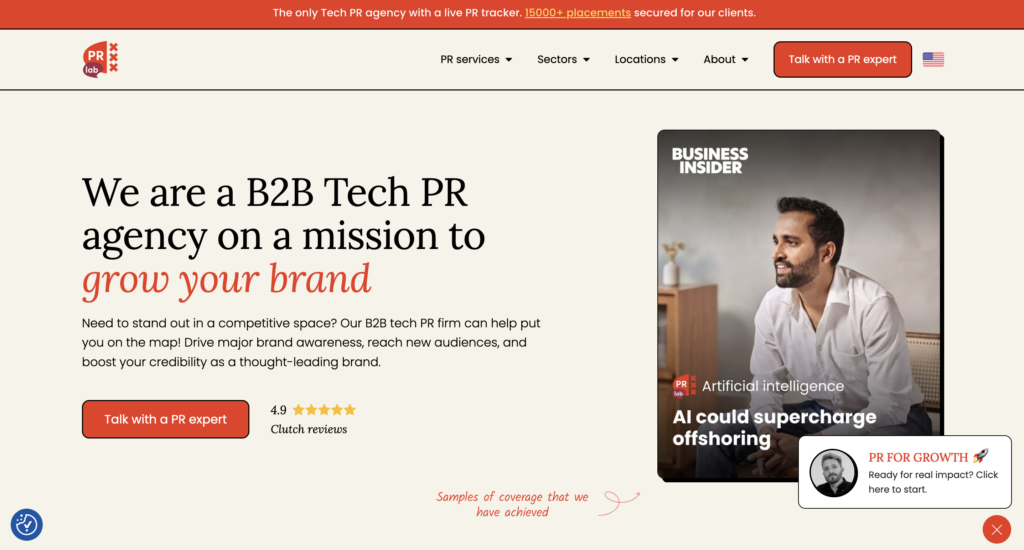
PRLab is an Amsterdam-based PR agency specializing in EU-based B2B SaaS and technology startups. Their approach is integrated, combining media relations with messaging development, corporate communications, and content strategy.
PRLab works with startups across the Netherlands and broader European markets, with a consistent focus on helping tech companies communicate complex products to business buyers in language those buyers actually understand.
Ideal For
- B2B SaaS companies based in the Netherlands or broader Benelux region.
- Tech startups entering EU markets that need messaging refinement alongside media outreach.
- Companies needing support with corporate communications and internal alignment.
Why Do They Stand Out?
PRLab is one of the stronger boutique options for European B2B SaaS companies that need integrated messaging and media work. Their focus on the EU tech ecosystem gives them relevant journalist relationships and cultural understanding for markets that US-based agencies often handle without adequate local knowledge.
Pros
- Deep focus on EU-based B2B SaaS – a well-defined niche with relevant expertise.
- Integrated approach combining messaging, media relations, and content.
- Boutique model means more senior attention than a large global agency.
Cons
- Limited geographic presence outside the Netherlands and core EU markets.
- Not well-positioned for consumer startups or B2C brands.
- Less suited for companies targeting the Iberian market or US media.
Final Verdict
PRLab is a reasonable choice for Netherlands-based or EU-focused B2B SaaS startups that want an integrated, boutique approach. Companies targeting the Iberian market or seeking US media coverage should look elsewhere.
6. Black Unicorn PR
Overview
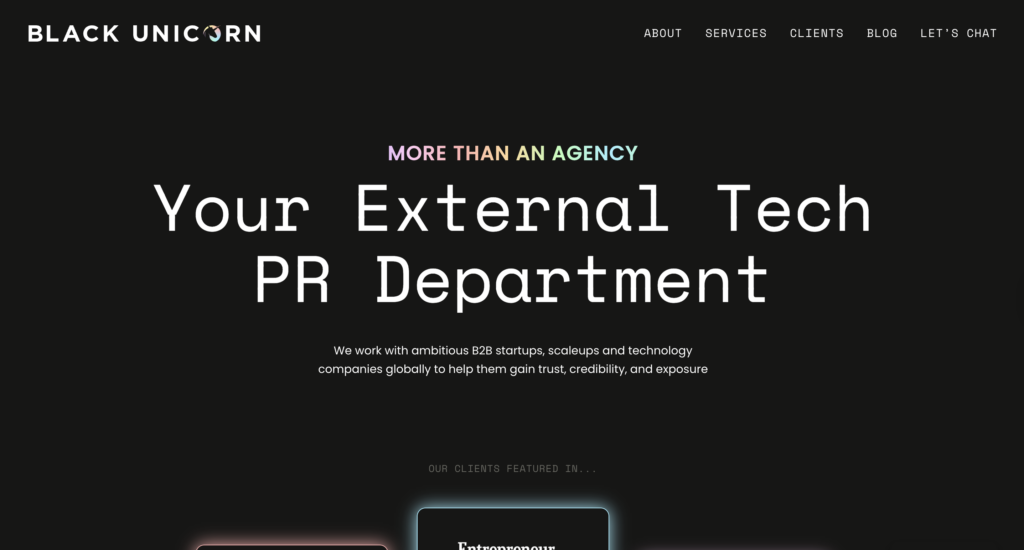
Black Unicorn PR is a London-based agency that positions itself explicitly as an external PR department for startups and scaleups – an embedded partner rather than a traditional agency. Specializing in B2B tech sectors such as fintech, insurtech, cleantech, and deeptech, they offer media relations, thought leadership, speaking opportunities, and PR workshops.
Their track record includes coverage in TechCrunch, Sifted, and Tech.eu – publications that carry meaningful weight with the investors and enterprise buyers that UK tech startups typically need to reach.
Ideal For
- UK-based B2B tech scaleups that want an embedded communications partner.
- Fintech, cleantech, and deeptech companies seeking tier-1 European tech media.
- Founders who want PR support without building a full in-house team.
Why Do They Stand Out?
Black Unicorn PR’s embedded model – positioning itself as a true extension of the client’s team – mirrors the working style that The Square applies in the Iberian market. Their track record in securing coverage in high-credibility European tech publications makes them particularly relevant for UK and EU B2B companies that need editorial validation from sources their buyers trust.
Pros
- Embedded team model delivers tighter collaboration than traditional agency setups.
- Strong European tech media relationships across TechCrunch, Sifted, and Tech.eu.
- Well-suited to complex B2B tech narratives in regulated sectors.
- PR workshops and training add capacity-building value beyond media pitching.
Cons
- UK and Northern European focus; limited Iberian market presence.
- Less suited to consumer brands or B2C startup PR.
- Smaller team size means capacity constraints on larger simultaneous campaigns.
Final Verdict
Black Unicorn PR is a strong option for UK-based B2B tech scaleups that value the embedded model and tier-1 European tech media coverage. Companies targeting Southern Europe or needing broader geographic reach should consider alternatives.
7. Bospar
Overview
Bospar is a US-based tech PR agency known for its high-velocity, results-oriented approach to media relations. They work with technology companies across a range of verticals and have built a reputation for rapid coverage generation – particularly useful for product launches, funding announcements, and time-sensitive news cycles.
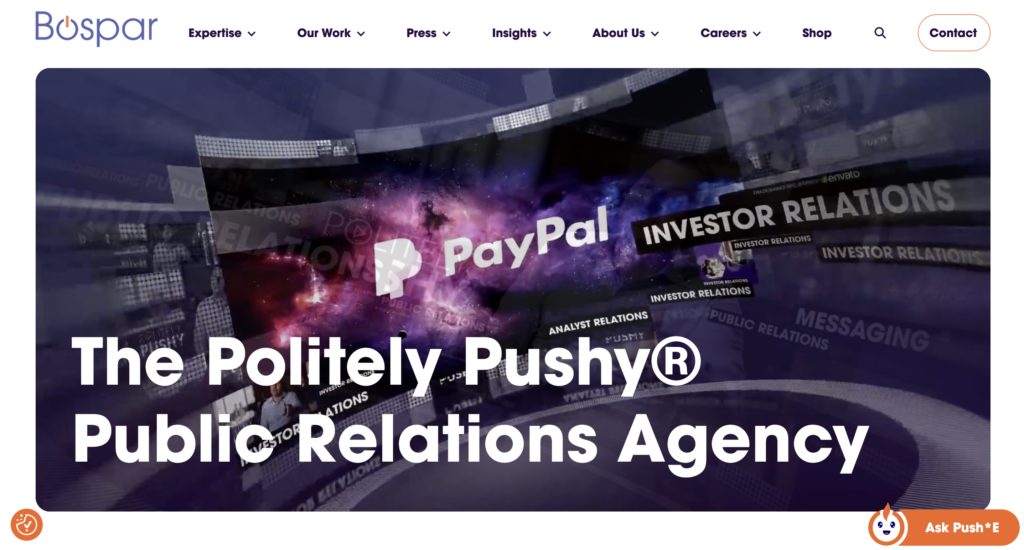
Bospar describes itself as a “politely pushy” agency, reflecting their proactive media pitching culture. For startups that have a strong story and need it placed fast, that culture translates into tangible output.
Ideal For
- US tech startups needing fast media coverage around product or funding news.
- Companies with strong stories that have struggled to land press through other agencies.
- Brands that prioritize speed and volume of media placements around key announcements.
Why Do They Stand Out?
Bospar stands out for the pace and consistency of their media outreach. They are particularly effective at creating narrative momentum around announcements – generating coverage windows rather than waiting passively for journalist interest.
Pros
- Rapid execution model suited to announcement-driven PR cycles.
- Strong US tech media relationships across multiple verticals.
- Proactive pitching culture delivers tangible placements in measurable timescales.
Cons
- US-centric model with limited European media reach.
- Less emphasis on long-term reputation-building versus announcement-driven coverage spikes.
- May not be the right fit for startups needing deep strategic integration or narrative development from scratch.
Final Verdict
Bospar is a smart choice for US tech startups with strong stories that need fast media traction around a specific moment – a launch, a raise, or a pivot. Companies needing integrated European strategy or sustained, long-term narrative development will find the model limiting.
8. MVPR
Overview
MVPR is a next-generation PR agency based in London and San Francisco, specializing in AI, fintech, and Web3 sectors. What sets MVPR apart is its combination of senior PR consultants with proprietary software, journalist insights, and AI-enabled workflows – designed to deliver efficient and transparent PR services at lower overhead than traditional agency models.
Their dual presence in London and San Francisco gives them transatlantic coverage, which is particularly useful for startups that need to build credibility simultaneously in European and US media.
Ideal For
- AI, fintech, and Web3 startups seeking senior PR expertise with flexible engagement terms.
- Founders who want transparent, data-driven reporting on PR performance.
- Early-stage companies that need a higher degree of flexibility in how they structure the engagement.
Why Do They Stand Out?
MVPR sits at a useful intersection between boutique senior expertise and technology-enabled efficiency. Their AI-enabled workflow means they can move faster than legacy agencies on research and outreach targeting – and their flexible engagement options make them more accessible for startups that are not yet ready for a full traditional retainer.
Pros
- Senior consultants supported by AI-enabled tools for faster, smarter outreach.
- Strong sector focus in AI, fintech, and Web3 with relevant journalist relationships.
- Dual presence in London and San Francisco for transatlantic coverage.
- Flexible engagement models that suit earlier-stage startups.
Cons
- Relatively newer agency – less established track record than 10+ year incumbents.
- Primarily focused on AI/fintech/Web3; limited expertise outside these sectors.
- Less suited to companies needing crisis management or deep corporate advisory.
Final Verdict
MVPR is a practical option for AI, fintech, or Web3 startups that want senior PR expertise with more flexibility than a traditional agency model provides. Companies in other sectors or those needing comprehensive crisis and corporate communications support will be better served elsewhere.
9. Salient PR

Overview
Salient PR is a specialized B2B tech PR agency based in Austin, Texas, with a mission to amplify companies shaping the future through technology. They work with VC-backed innovators across AI, SaaS, cybersecurity, crypto, IoT, gaming, and sustainability.
Notably, they have supported startups backed by Sequoia, a16z, Y Combinator, and Founders Fund. Services include media relations, thought leadership, narrative development, and content strategy, with an emphasis on precision, clarity, and long-term partnership over campaign-by-campaign work.
Ideal For
- VC-backed B2B tech startups with tier-1 investor backing.
- Founders in AI, cybersecurity, SaaS, or sustainability seeking sector-specific narrative development.
- Companies that prioritize long-term brand authority over short-term media bursts.
Why Do They Stand Out?
Salient PR’s investor-adjacent positioning is a meaningful differentiator. Working with companies backed by Sequoia and a16z gives them an understanding of the expectations and timelines that top-tier investors hold – and the ability to help startups build narratives that meet those standards from the outset.
Pros
- Deep relationships within the VC-backed startup ecosystem.
- Sector precision across multiple high-growth B2B tech verticals.
- Long-term partnership focus rather than campaign-by-campaign execution.
- Strong emphasis on narrative clarity – valuable for complex technical products.
Cons
- US-centric; limited European market presence.
- Less suitable for consumer-facing startups or non-tech companies.
- Investor-adjacent positioning may not align with startups outside the VC ecosystem.
Final Verdict
Salient PR is a strong partner for VC-backed US tech startups that need narrative precision and credibility in investor circles. European startups or companies outside the VC-backed tech ecosystem will find better-suited alternatives.
10. FameHero
Overview
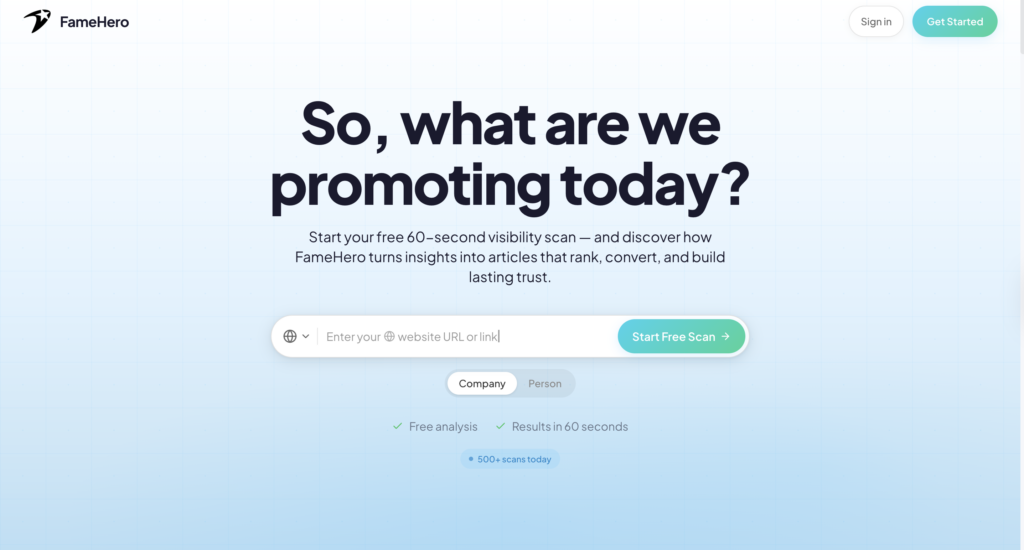
FameHero is a tech-enabled media visibility platform that operates differently from traditional PR agencies. Rather than the classic pitch-and-pray model, FameHero offers guaranteed media placements across a network of 500+ vetted publications. Their approach combines AI-driven SEO and GEO (Generative Engine Optimization) diagnostic tools with human-written editorial content.
The focus is on building digital authority and brand search visibility rather than cultivating traditional journalist relationships. For startups that are primarily concerned with AI search discoverability and organic digital presence, this is a meaningfully different model.
Ideal For
- Early-stage startups and SaaS companies that want guaranteed media placements without a traditional retainer.
- E-commerce and digital brands focused on SEO impact and AI search visibility.
- Founders who want to test media visibility before committing to a full-service agency.
Why Do They Stand Out?
FameHero addresses one of the biggest frustrations with traditional PR: paying ongoing fees with no guarantee of results. Their guaranteed placement model and “You Approve First” policy remove the financial risk that makes many founders hesitant to invest in PR at all.
They are particularly well-suited to the 2026 reality where AI platforms like ChatGPT and Perplexity are becoming primary discovery engines – and brand mentions in high-authority publications directly influence those results.
Pros
- Guaranteed media placements – no pitch-and-pray uncertainty.
- Strong focus on SEO, building long-term digital authority alongside media coverage.
- “You Approve First” guarantee means founders review all content before publication.
- Low barrier to entry makes it accessible for bootstrapped or early-stage founders.
Cons
- Not a traditional PR agency – lacks crisis management, media training, or strategic advisory.
- Deep journalist relationships and reactive commentary opportunities are limited.
- Less suited to companies needing earned media in tier-1 outlets like the Financial Times or Wall Street Journal.
Final Verdict
FameHero is a practical starting point for digital-first startups and early-stage founders who want media visibility and SEO lift without committing to a traditional agency relationship. Companies needing comprehensive strategic communications, crisis counsel, or genuine journalist relationships should invest in a full-service PR agency.
How to Choose the Best PR Agency for Startups (What To Consider)
1. Match the Agency to Your Growth Stage
Startup PR needs vary enormously between pre-seed and Series C. An agency that excels at rapid announcement-driven coverage may not be the right fit for a company that needs to build a long-term investor narrative from scratch.
Be honest about where you are in the business – and choose a firm that has worked with companies at your exact stage, not just your sector. Ask for references from clients at a similar size and funding level.
2. Evaluate Geographic and Media Market Fit
PR is a local business masquerading as a global one. Journalist relationships in Portugal do not transfer to Spain, and they definitely do not transfer to the US. Identify the specific markets – geographically and by media outlet type – where you need visibility.
Verify that your prospective agency has direct, established contacts in those markets. Ask for evidence: specific journalists they have placed clients with, not just names of publications they claim to “have relationships with.”
3. Assess the Integration Model
The best startup PR agencies work as an extension of your team. That means weekly check-ins, proactive idea generation, and a team that knows your product roadmap well enough to identify PR opportunities before you think to ask.
Agencies that operate at arm’s length and wait for briefs rarely deliver the proactive value that fast-moving startups need. During your pitch process, ask specifically how the team structures day-to-day collaboration – the answer will tell you a lot.
4. Demand Specific Measurement Frameworks
Vague reporting on “reach” and “impressions” is a warning sign. The best PR firms for startups tie their work to business outcomes: media coverage driving inbound traffic, brand mentions appearing in investor due diligence, thought leadership content converting prospects.
Before signing, ask which metrics they report on, how often, and what they do when coverage velocity falls short of expectations. An agency comfortable with that conversation is one operating with genuine accountability.
5. Look for Proactive Thinking, Not Just Tactical Execution
There is a meaningful difference between an agency that executes your brief and one that challenges you to sharpen your narrative, identifies reactive commentary opportunities you would have missed, and proposes campaign angles you had not considered.
That proactive approach – the willingness to say “here’s what we think you should be doing, and here’s why” – is the clearest signal that you are dealing with a true strategic partner rather than a task-fulfillment service.
6. Check Cultural Fit – It Matters More Than You Think
You will speak to your PR team multiple times per week. If the chemistry is not there during the pitch process, it will not improve once the contract is signed.
The best startup PR relationships function like trusted advisor relationships – candid, collaborative, and built on mutual respect. Pay attention to how responsive the agency is during the sales process; it tells you exactly how responsive they will be once you are a client.
Everything You Need to Know About Startup PR
| Category | What To Consider |
|---|---|
| Top 3 PR Agencies for Startups | The Square (innovation & Iberia), Ballou PR (European multi-market), FameHero (digital-first & early stage) |
| Who Is It For | Pre-seed through Series C startups, VC-backed companies, B2B tech founders, innovation ecosystem players |
| Use Cases | Funding round visibility, product launches, market entry, founder thought leadership, employer branding, crisis preparedness |
| How to Choose | Match growth stage, verify geographic media fit, assess integration model, demand clear measurement |
| Mistakes to Avoid | Hiring for brand name over sector fit, choosing an agency without verifying genuine media relationships, signing long contracts before testing the partnership |
Build Credibility with The Square
The right PR agency does not just generate headlines. It builds the kind of trust that makes investors more confident, buyers more willing, and talent more attracted to your company – and it does that consistently, over time.
The Square is dedicated to helping innovation-driven startups and scaleups build that credibility in the Iberian market and beyond. As the only PR agency in Portugal with a physical office in Spain, we offer integrated cross-border communication strategies that no other firm in the region can match.
We work as a true extension of your team – embedded, proactive, and deeply invested in your outcomes. We do not distribute press releases and call it a strategy. We challenge your narrative, identify your highest-value media opportunities, and act with entrepreneurial speed.
If you are building something ambitious in Portugal, Spain, or entering the Iberian market, we are ready to talk.
FAQs About PR Agencies for Startups
What is the best PR agency for startups in 2026?
The best PR agency for startups in 2026 is The Square for innovation-driven companies in Iberia, offering cross-border capabilities, proactive strategy, and deep team integration.
What should I consider when choosing the right startup PR agency for me?
What you should consider when choosing the right startup PR agency includes geographic media market fit – the agency must have real journalist relationships in your target markets, not just a brand presence there. You should also evaluate their experience at your specific growth stage, since pre-seed PR needs differ significantly from Series B. Finally, assess how they measure and report results: agencies that only report on “impressions” rather than business outcomes are a red flag.
How does The Square differ from other PR agencies for startups?
The Square differs from other PR agencies for startups by operating exclusively as the agency for the new economy, specializing in innovative, digital-first, and growth-stage companies rather than serving a broad range of industries. We are also the only PR agency in Portugal with a physical office in Spain, enabling genuinely integrated Iberian PR strategies under one team. Our model prioritizes deep integration with client teams over transactional execution, and proactive opportunity identification over reactive press release distribution.
How do I get started with The Square?
Getting started with The Square begins with a discovery conversation to understand your business, current communications challenges, and growth objectives. From there, the team develops a tailored strategic proposal covering media targets, narrative positioning, and proposed KPIs. Project-based engagements are also available for companies that prefer to test the partnership before a longer commitment.
How easy is it to switch to The Square from another PR agency?
Switching to The Square from another PR agency is straightforward. We conduct a communications audit during onboarding to understand existing media relationships, past coverage, narrative positioning, and any active campaigns. Transition timelines are typically four to six weeks, during which we build the full understanding of your business needed to operate as a true extension of your team. Most clients find the switch accelerates results within the first quarter.
What is the difference between PR for startups and traditional corporate PR?
The difference between PR for startups and traditional corporate PR lies primarily in speed, narrative flexibility, and the nature of the goals. Startup PR is built around high-stakes moments – funding announcements, product launches, pivots – and requires agencies that can move quickly and adapt strategy as the business evolves. Traditional corporate PR is typically more focused on reputation maintenance, stakeholder management, and regulatory communications for established companies. Startup PR firms also tend to offer more flexible engagement models than the rigid structures common in corporate communications.